


Most membership programs don’t fail because they’re bad ideas. They fail because they never make it out of planning.
Merchants wait for the perfect structure, the perfect perks, or the perfect launch moment. In the meantime, they learn nothing about how their customers actually respond.
This post is about getting your first membership live — not finished, not optimized, just real. Your first membership isn’t a long-term commitment; it’s a way to start learning.
What a first membership is for
Your first membership program has one primary job: to teach you how customers respond to member-only value.
At this stage, you’re not trying to maximize revenue or design a forever program — you’re trying to understand which perks matter, how visible membership should be, and what behavior actually changes when someone becomes a member.
A live, imperfect membership gives you answers that planning never will.
Your first membership is a learning tool, not a finished product.
Step 1: pick a single reason to exist
Strong memberships start with a clear purpose. Not a list of perks — a single reason the membership exists.
That reason is usually one of three things: reducing friction, creating access, or supporting repeat behavior. Trying to do all three at once is a common early mistake.
If you can’t explain the membership’s value in one sentence, it’s probably trying to do too much.
Step 2: choose the simplest possible structure
Simplicity is a feature at launch.
For most brands, a free membership is the easiest place to start. It removes friction for customers and lowers the stakes while you learn. Paid memberships can come later, once you know what value resonates.
Limit yourself to one core perk, maybe two. Avoid tiers, points, and complicated rules. Those systems are easier to add than they are to unwind.
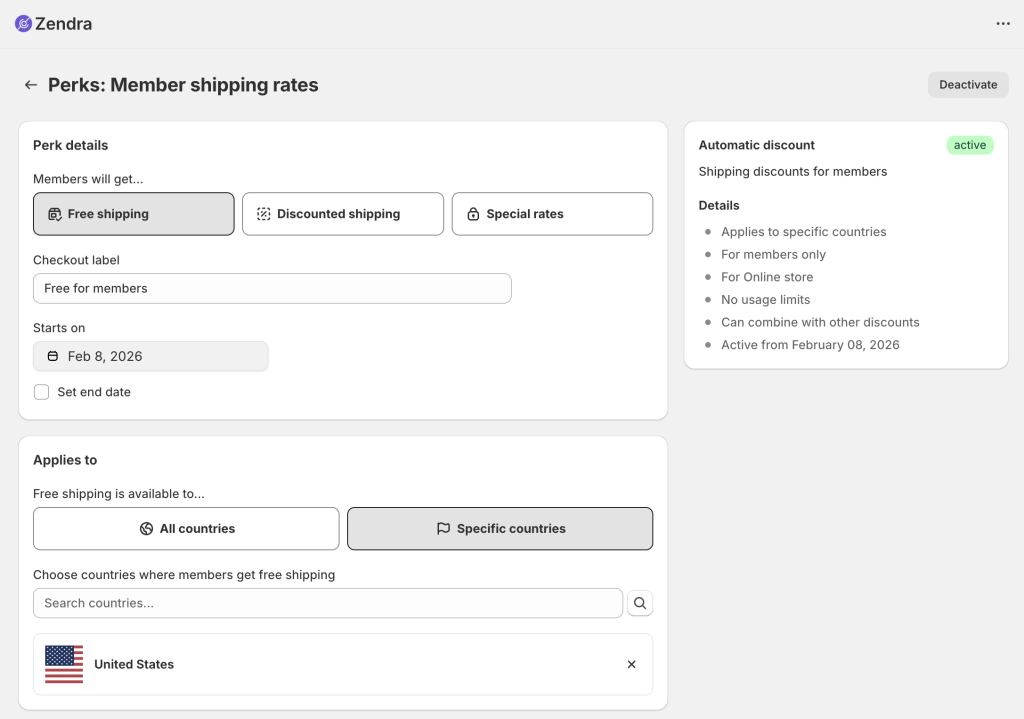
At launch, clarity beats generosity.
Step 3: decide how customers become members
The way customers become members shapes how the program feels.
Automatic triggers, like account creation or first purchase, tend to perform well early because they reduce decision fatigue. Opt-in flows can work too, but they require clearer communication and stronger perceived value.
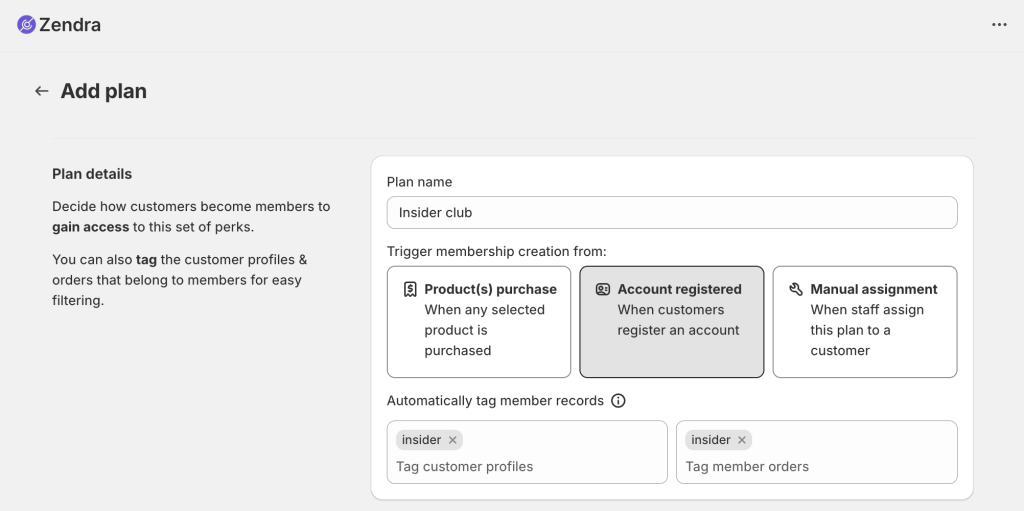
There’s no single right answer here. The important thing is to choose one approach and observe how customers respond before adding complexity.
Step 4: make the membership visible (but not loud)
Memberships work best when they feel like a quiet advantage.
Explain the program clearly in places where customers are already paying attention: account pages, product pages, or checkout. Avoid turning the membership into a hard sell or interrupting the shopping experience.
If membership value has to be shouted, it usually isn’t clear enough yet.
Step 5: launch, then watch the right signals
Once your first membership is live, resist the urge to judge it too quickly.
Early on, focus on a small set of signals: whether members use the perk, whether repeat purchase behavior changes, and what qualitative feedback you hear from customers.
Ignore vanity metrics like total members or edge-case complaints. Those become meaningful later.
How first memberships evolve
Most early membership issues come from overreach:
- launching with too many perks,
- leaning too heavily on discounts to force adoption, or
- treating early feedback as failure instead of signal.
Early friction is information. Use it!
Once you understand what members value, evolution becomes much easier.
You might add access-based perks, introduce a paid tier, or refine how membership is earned. The key is that each change is grounded in observed behavior, not assumptions.
The best membership programs grow alongside their customers, and a live membership teaches you more than a perfect plan ever will. Start small, make it real, and learn quickly!
When memberships are treated as systems to evolve, rather than decisions to finalize, they become one of the most flexible tools you can build into your business.






Leave a Reply