


Most membership programs start with a prompt: a banner asks customers to join; a pop-up appears; a signup form sits on the homepage waiting for someone to notice it.
But the moment customers are most receptive to membership isn’t when they’re browsing — it’s immediately after they buy. At that moment, something important has already happened: the customer has committed. They’ve trusted your store with their money; the relationship has begun.
Instead of asking them to join later, you can simply recognize that moment and grant membership automatically.
Why post-purchase membership works
There’s a strong behavioral reason this approach works well.
Psychologist Robert Cialdini’s research on persuasion shows that people prefer to behave consistently with commitments they’ve already made. Once someone has taken a meaningful action — like making a purchase — they are more likely to accept a deeper relationship with the brand (Learn more: Cialdini’s principle of commitment and consistency).
There’s also a related phenomenon (one of my favorite principles!) known as the IKEA effect. Researchers found that when people invest effort or resources into something, they tend to value it more highly and feel greater attachment to it (Harvard Business Review summary; Norton, Mochon & Ariely research).
A first purchase represents both commitment and investment, which makes it one of the strongest moments to deepen the relationship.
The simple free offer
The first purchase is the hardest step. Everything after that should reinforce the relationship.
Most membership programs follow this structure:
Homepage → invite customer to join (usually, for free)
But an alternative model is often more effective:
Purchase → automatically recognize the customer as a member
The difference may seem small, but the framing changes everything. Instead of asking customers to opt in, you acknowledge their commitment.
Customers don’t sign up; they graduate.
When to use post-purchase vs opt-in membership
Is this always the best model? The answer is always, “it depends.” Some industries have low repeat purchase rates. In this case, closing the first sale can be more impactful than building a long term relationship.
Free, opt-in memberships are great for removing shopping friction to drive conversion. They can incorporate free shipping, or other perks that help to overcome purchase objections, helping you close more sales.
That’s not what a post-purchase memberships do — they’re intended to build long term relationships with customers, and make subsequent purchases more likely. They can offer the same perks as an opt-in membership, but the shift from transaction (exchanging a membership for signup) to something earned can be impactful on your bottom line.
Consider a post-purchase membership for:
- Brands with repeat purchase cycles
- Community or lifestyle brands
- Creator-led stores
- Merchants who want frictionless membership adoption
How to implement this with Shopify Flow
Shopify Flow makes a post-purchase membership straightforward when paired with Zendra.
Use the Order paid trigger to start the workflow. This trigger fires when an order’s payment status changes to paid, which ensures only successful purchases count toward the rule.
Example workflow: convert first-time buyers into members
Trigger: Order paid
Condition: Customer order count ≥ 1
Action: Create membership (Zendra)
Once the membership is created, Zendra automatically applies the Member tag to the customer and activates any perks associated with that membership plan. No additional tagging or access configuration is required.

Variations on the post-purchase membership model
There are several ways to adapt this pattern depending on how exclusive you want membership to feel.
Require a minimum order value
You might only want membership triggered after a meaningful purchase, especially if you have your main catalog, but also sell accessories at a lower price.
Example workflow:
- Order paid →
- Condition: Order total ≥ $75 →
- Create membership
This prevents very small orders from immediately unlocking membership.
Trigger membership from a specific product
Some brands tie membership directly to a product—often a starter kit, membership bundle, or premium item.
In Zendra, this can be configured directly in the membership plan settings by choosing a purchase trigger. When the specified product is purchased, the membership is created automatically.

This approach is common for creator brands, courses, and communities where purchasing a specific product unlocks member access.
Combine with milestone rewards
Post-purchase membership works especially well when it becomes the first step in a progression system.
For example:
- First purchase → membership granted
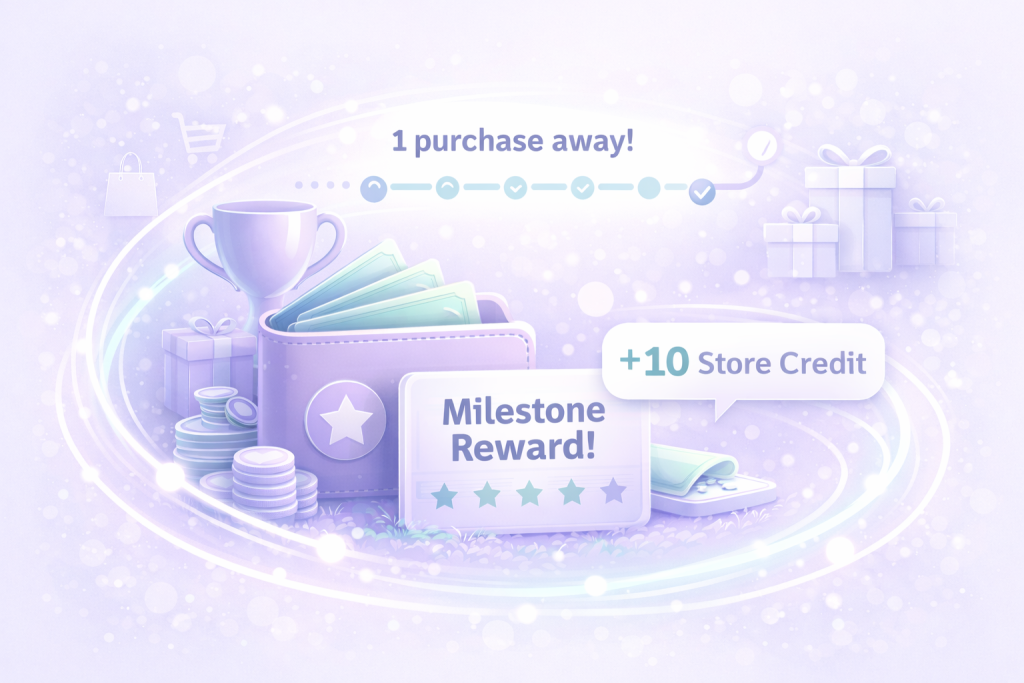
- Third purchase → milestone store credit
- Fifth purchase → upgraded status or reward
This creates forward momentum rather than a one-time perk.
What members should see immediately
The moment after membership is granted is important.
Research in customer experience consistently shows that recognition strengthens emotional attachment to a brand. When customers feel acknowledged, their sense of relationship deepens.
When someone becomes a member, make the change visible:
- Send a welcome or recognition email
- Explain the new benefits they’ve unlocked
- Show member perks clearly in their account or storefront
(Zendra does these automatically for you!)
Even small signals, like access to a member collection or early product drops, help reinforce the meaning of the upgrade.
Post-purchase memberships as recognition
The difference between asking someone to join and recognizing them as a member is subtle, but that framing changes the relationship.
Membership stops being a marketing pitch and becomes a natural step in the customer journey. This small shift can have a big impact on lifetime value.




Leave a Reply