

When merchants say they want a “Nike-style membership,” they usually picture one of two things:
- discounts for members, or
- a points-and-badges loyalty program with tiers to climb.
That’s the surface, but it’s not what makes Nike’s membership work. Nike’s program succeeds because it removes friction, creates access, and builds habit — not because it hands out coupons. If you copy the perks without the structure underneath, you get a program that leaks margin and feels forgettable.
This post breaks down what Nike’s membership does, why it works, and how to build a Shopify-realistic version that gets similar outcomes — without Nike’s margins, logistics network, or brand gravity.
The big misunderstanding: Nike’s membership is not a discount program
Nike doesn’t lead with “10% off.” It leads with membership as the default way to shop. The program is built to make buying easier, faster, and more rewarding over time. Discounts exist, but they aren’t the core value. The core value is reduced friction at checkout, access to things non-members can’t get, and a quiet sense of belonging. Those are the same three motives behind why people join memberships anywhere, not just at Nike.

Most brands copy the wrong layer — the incentive instead of the system. If you treat your membership like a coupon, customers will treat it like one, too.
What Nike’s membership does
Strip away the marketing language and the program comes down to a few mechanics:
- Free shipping and returns — removes hesitation and lowers the cost of every repeat purchase.
- Early and exclusive access — members get first access to launches, drops, and limited products.
- Member-only products — some items simply don’t exist unless you’re logged in.
- Light loyalty signaling — you’re “in,” with no complicated earnings math to learn.
Notice what’s missing: no visible points balance, no aggressive discounting, no tier system to decode on day one. Each perk does one job — make it easier to buy again, and harder to justify buying elsewhere.
Why it works: the psychology beneath the perks
The perks aren’t the point; they’re delivery mechanisms for three well-documented behaviors.
- Friction is a tax on repeat buying, and members stop paying it. Free shipping and saved details remove the small moments of hesitation that kill repeat purchases. McKinsey’s research on paid loyalty programs found members are meaningfully more likely to buy more often and to choose the brand over competitors after they join (McKinsey).
- Access creates progress, and progress is motivating. The goal-gradient effect — people work harder as a reward comes into view — shows up well beyond loyalty cards (Kivetz, Urminsky, and Zheng, 2006). Early access and member-only drops give members something to move toward, so the membership keeps shaping behavior between purchases.
- Belonging turns a transaction into identity. Once something is yours — your membership, your access, your status — you value it more than its sticker price, an instinct the endowment and IKEA effects both describe (Norton, Mochon, and Ariely, 2012). A member-only product isn’t just a product; it’s proof you’re on the inside.
Put together: friction removal drives frequency, access drives anticipation, and belonging drives identity. None of it requires margin erosion.
Where Shopify brands go wrong when copying Nike
Borrowing the perks without the substance is where programs fail. The common mistakes:
- Leading with discounts — they feel tangible, but they cheapen the relationship and compress margin immediately.
- Launching with too many perks — more perks isn’t more value; it’s confusion and operational drag.
- Making membership feel small — “$5 off your next order” reads as a coupon, not belonging.
- Over-engineering from day one — tiers, points, and gamification before you’ve proven demand stall momentum.
- Treating membership as a campaign, not a system — memberships compound over time; campaigns expire.
Nike didn’t build its program to spike one quarter. It built it to shape long-term behavior, with belonging — not price — doing the work.
The Shopify version of a Nike-style membership
Follow our documentation recipe for a step-by-step guide to building this membership.
A Shopify version should be simpler, tighter, and cheaper to operate — especially at launch.
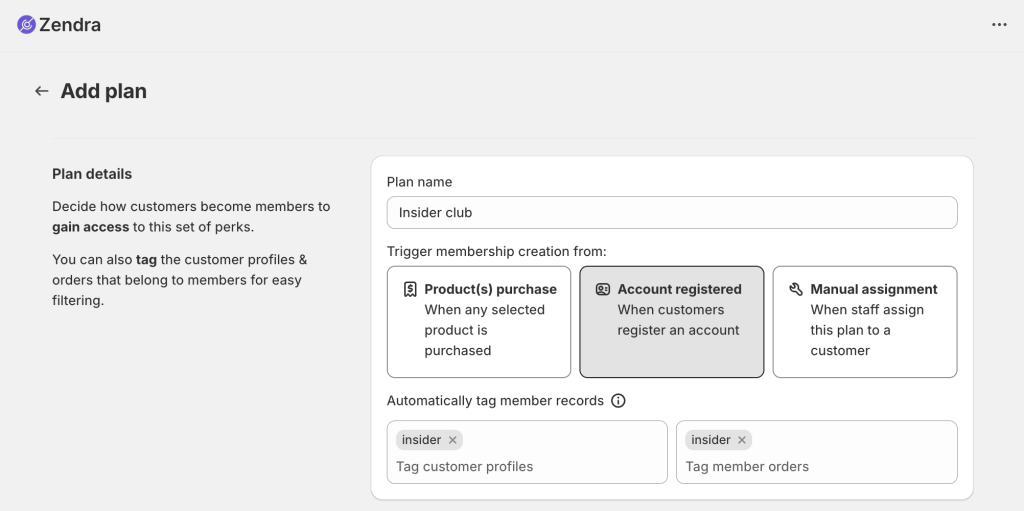
1. Start with a free membership
Make joining frictionless by using account creation as the trigger. Paid memberships can come later, once you understand the value you can offer.
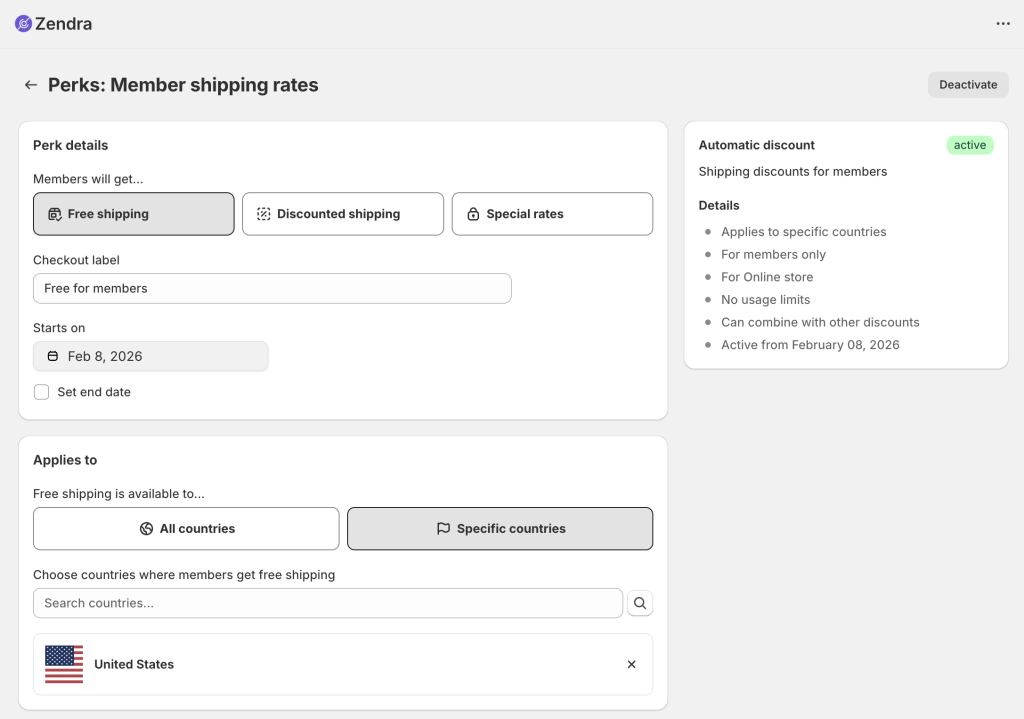
2. Choose one core perk to remove friction
Pick a perk that makes purchasing easier — free shipping (with constraints), discounted shipping, or free returns. It should make checkout feel easier every time, not just once.
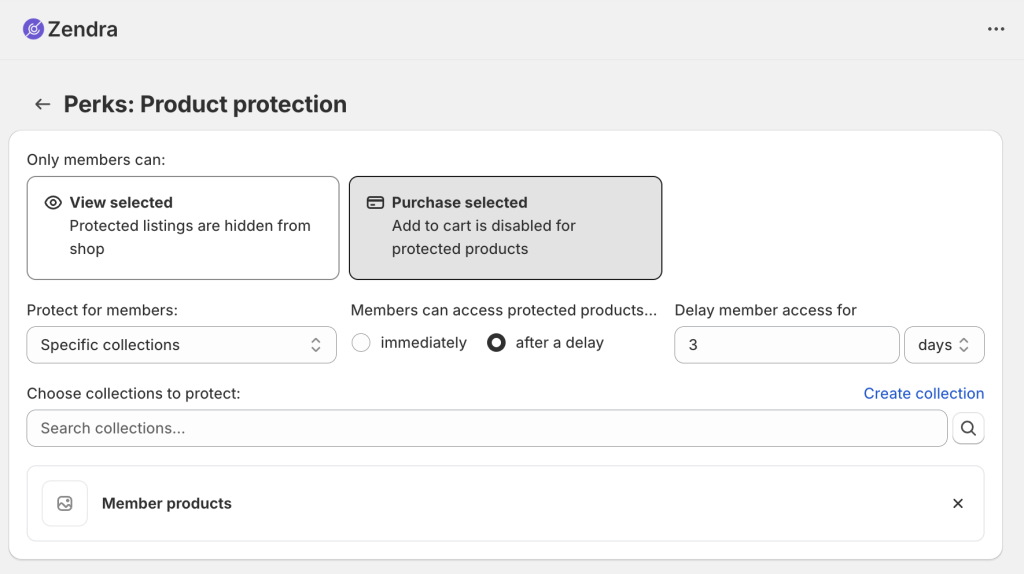
3. Add an access-based perk
Add one perk that creates a sense of exclusivity: early access to launches, member-only products or bundles, or gated collections. Access scales better than discounts and feels premium even when it’s cheap to run.
Why this beats a discount-driven membership
A Nike-style structure wins because it preserves margin, builds habit, and creates identity instead of dependency. It also leaves room to grow — you can add paid tiers, expedited shipping, or member-only content later, from a position of strength rather than walking back a discount you can’t afford.
Discount-first programs train customers to wait; access-first programs train customers to belong. That difference compounds fast.
When a Nike-style membership fits best — and when it doesn’t
Access-first membership isn’t the right move for every store. It works best when:
- you launch products in waves or drops, so early access is genuinely valuable;
- you have repeat-purchase potential, so reduced friction compounds;
- your brand carries enough identity that “being on the inside” means something.
If that sounds like your store, our guide covers how to build one on Shopify end to end.
It’s a weaker fit when your catalog is small and static, when purchases are genuinely one-time, or when you’re a pure price player whose customers come for the lowest number — there, a transparent discount or subscribe-and-save may serve them better. If price is your value and differentiator, don’t dress it up as belonging.
You don’t need Nike’s scale — just their structure
Nike’s membership works because it’s a system designed around behavior, not incentives. Shopify brands succeed when they do the same: they remove friction, they create access, and they let value compound over time.
You don’t need Nike’s margins, logistics, or brand power to do this well — you need to copy the thinking and implement it simply. Start with a free membership, one friction-reducing perk, and one access perk. Ship it, then improve as people join and you learn what they respond to. And ask for feedback! The goal isn’t to get it right on day one; it’s to start learning.
That’s where the right membership infrastructure makes the difference.



Leave a Reply