


Margins are what fund memberships — not the membership fee, your average order value, or your marketing war chest.
McKinsey’s research on paid loyalty is informative: consumers expect to receive at least a 150 percent return on their subscription fee in the form of new offerings. This means that, no matter what you charge for a membership (if you charge at all!), you’ll need to deliver more perceived value than the members paid to join — and you should assume members will evaluate your program against that bar if you don’t want your churn to explode.
Great memberships ensure that members place a high premium on their access or exclusivity. Even so, you’ll incur real costs to running a membership program by offering periodic discounts, free shipping, or to create content for your members.
If you’re working with tight margins, the membership question you need to ask is, “how do I create member value without quietly giving away my profit?”
This post is a practical guide to designing (and pricing) a membership program that can work even when you can’t afford to offer always-on discounts or expensive perks.
Why low-margin memberships fail
Low-margin memberships usually fail for one of a few predictable reasons:
- they rely too heavily on discounts,
- they promise value that’s expensive to deliver, or
- they create operational work that the business can’t sustain.
The fix is not to avoid memberships; it’s to choose perks that are high perceived value, low marginal cost, and operationally simple.
Perks that work when margins are tight
When margins are tight, your best perks tend to fall into two buckets: perks that reduce friction, and perks that create access.
1. Access perks (high value, low cost)
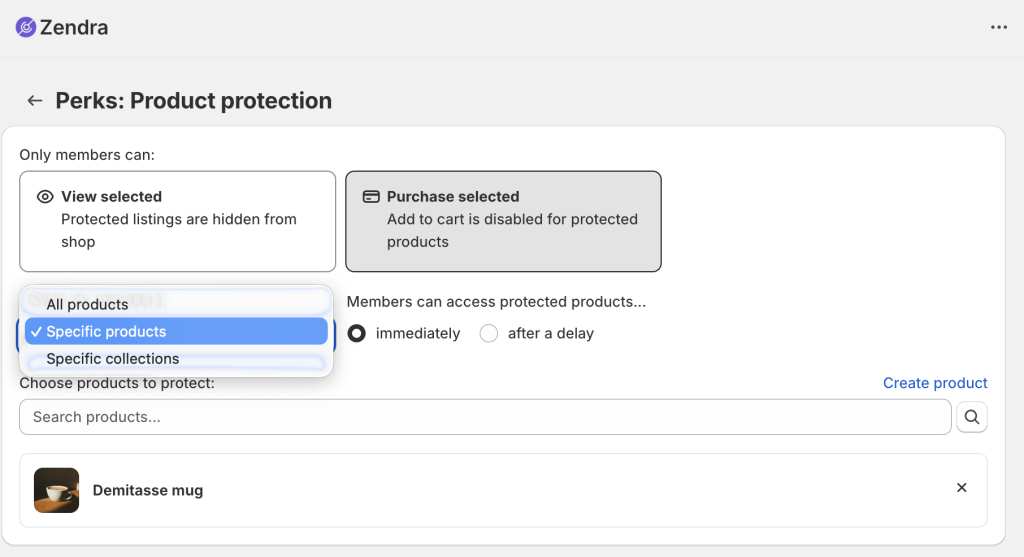
Access perks are often the cleanest way to build member value without margin leakage. Early access to launches, member-only products, gated collections, and members-only bundles can all feel premium while costing very little to deliver.
2. Friction-reduction perks (use with guardrails)
Shipping perks can work with low margins, but they need constraints. Instead of “free shipping forever,” consider thresholds, limited regions, limited methods, or limited windows. The goal is to reduce hesitation, not to subsidize every order.

3. Discounts are still useful, just not always-on
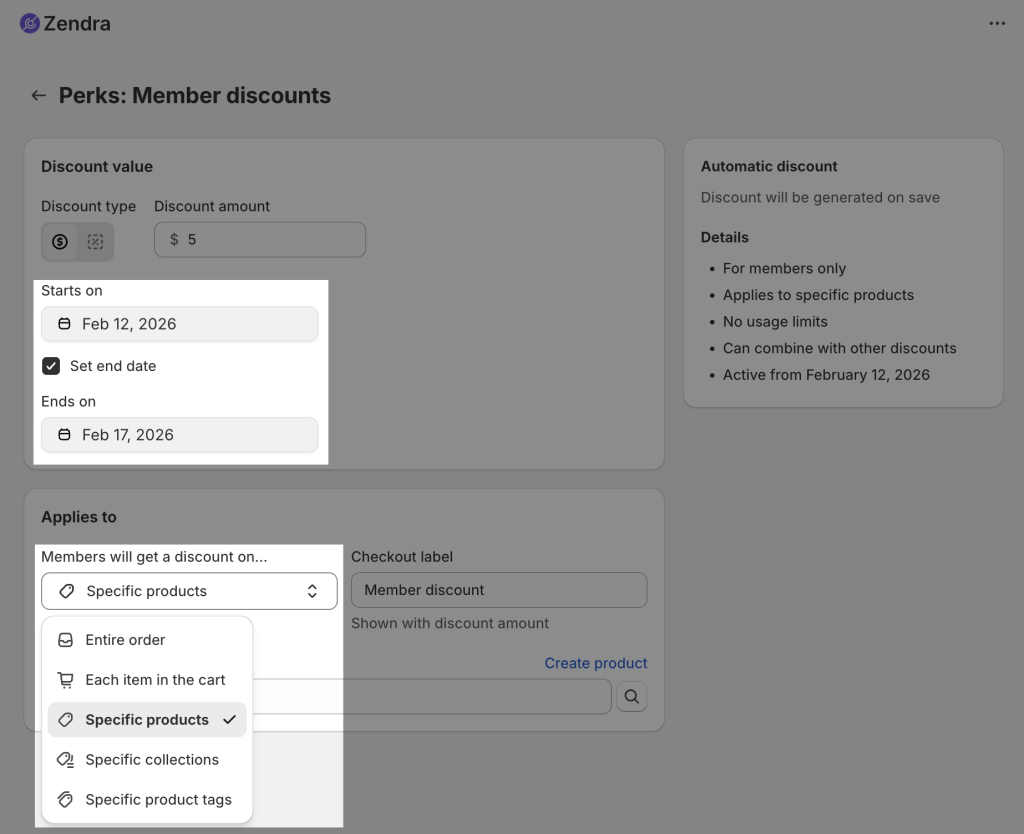
Discounts can be excellent membership perks when they’re intentional: targeted to specific products or collections, used for limited windows, or positioned as member flash sales. This preserves margin and keeps the membership from feeling like a standing coupon.
Read our in-depth guide on why your membership should be more than a discount.
Three pricing models that fit low-margin businesses
Once perks are chosen, pricing is mostly about matching customer expectations and keeping your promise sustainable. Here are three models that tend to work well when margins are tight.
Free membership with real access
If you can’t afford to “pay back” a fee with perks, start free. Use access perks to create real member value, and treat the program as a way to increase repeat purchases and retention.
Remember, “access” can be anything:
- Protect new products for a time so only members can see them.
- Protect brand swag items or speciality products (like customized items) for members only.
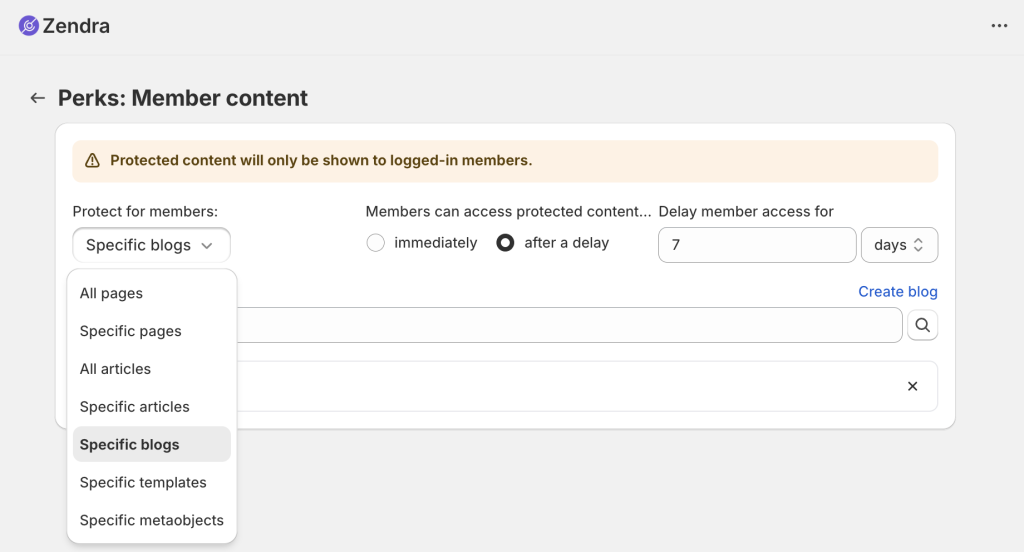
- Protect some blogs, articles, or pages for members — great for videos or content related to your brand, pages for in-person events, or lists of marketing partner promo codes.
Low-fee paid membership with fast time-to-value
A low-fee membership can work when the first benefit shows up quickly and clearly. This is where the McKinsey “150 percent return” expectation matters: if customers pay, they want to feel smart about it soon.
- Create a product listing for your membership. (Tip: mark it as a digital / non-shipped product, no inventory.)
- Set the price according to the 150% return benchmark — starting small is fine! For example, you can set a $19 per year membership.
- Create the paid plan in Zendra — use a billing plan to leverage monthly or yearly recurring billing!
- Set up the perks for members.
Some good perks for this type of membership include free or reduced shipping, or access to expedited shipping rates (they don’t have to be free!).

Before you pick a price, ask three questions. If you can answer them clearly, you’re usually in a good place.
- What is the member advantage, in plain language?
- How often will a typical member actually experience it?
- Can we deliver it reliably without margin surprises?
Hybrid: free base, paid upgrade later
Start with a free membership that establishes identity and access, then introduce a paid tier only after you know which perks members actually use (or you know how you can price it effectively).
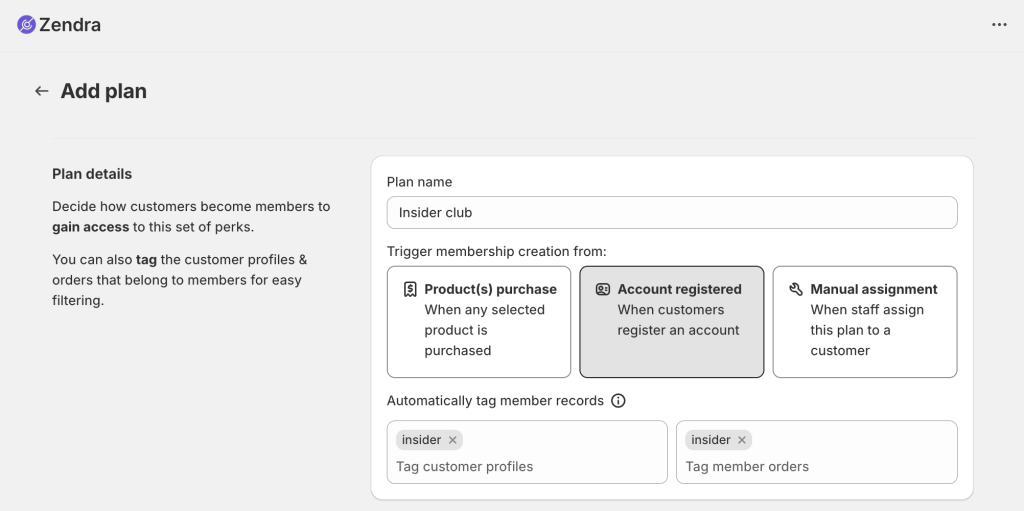
This avoids guessing, and it reduces the risk of overpromising. You can create both free and paid memberships in Zendra — free memberships trigger from account registration, and paid ones from purchasing a membership product.
Positioning your membership
Low-margin memberships live or die on clarity. If customers have to do mental math, or if the value depends on rare edge cases, the program will feel risky.
Be specific about what members get, when they get it, and any constraints. Constraints don’t reduce value when they’re communicated well; they increase trust.
The safest way to build a membership with low margins is to start with perks you can sustain, then expand based on observed behavior. You can add value more easily than you can take it away!
If your membership feels like a quiet advantage, customers will keep it. If it feels like a price negotiation, they’ll keep shopping around.
If you’re still choosing a structure, start with patterns that emphasize access and friction reduction, then layer pricing later.






Leave a Reply